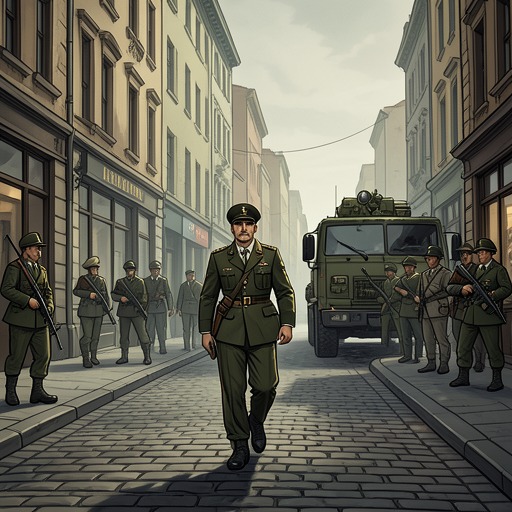
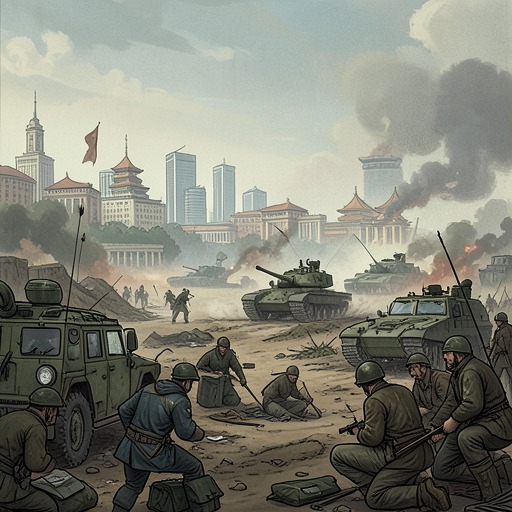
From 1482 through the colonial period
The Colonial Ruin
Portuguese expansion into the region began with the arrival of Diogo Cão at the [Congo River](entity:location-recall-location-congo-river-234bd67cb94e) in 1482; settlement at [Luanda](entity:location-recall-location-luanda-428fd2865077) followed in the sixteenth century. For centuries, war and the export of enslaved people devastated the population, while colonial rule left much of the country impoverished and neglected.
The book presents this long history as the ground beneath the conflicts of 1975: [Angola](entity:location-recall-location-angola-fdab84759b0c) was a vast country shaped by forced movement, unequal power, and repeated wars. Its past helps explain why independence did not bring an easy peace.
1948
The Discovery Movement
A group of young Angolan intellectuals launched the cultural movement [Vamos descobrir Angola](entity:organization-recall-organization-vamos-descobrir-806aa72e8697) and published the literary periodical Mensagem. The police shut it down after two issues, but the movement helped make Angolan cultural identity a political force.
The poets [Viriato da Cruz](entity:character-recall-character-aa745ca7bc25), [Agostinho Neto](entity:character-recall-character-agostinho-neto-36910377ec75), and [Mário de Andrade](entity:character-recall-character-e69947b27f2b) were among its central figures. Their work helped prepare the intellectual foundations for organized liberation movements.
1953 to 1956
The MPLA Takes Shape
Angolan liberation organizations developed under conditions of secrecy. [PLUA](entity:organization-recall-organization-plua-b779b149de7c) appeared in 1953, and in 1956 it joined with other groups to form the MPLA in [Luanda](entity:location-recall-location-luanda-428fd2865077), with [Agostinho Neto](entity:character-recall-character-agostinho-neto-36910377ec75) at its head.
The formation of the movement marked a major step toward a national political project, though the country’s political life remained fragmented among organizations with different regional and social bases.
1954 to 1966
Rival Liberation Movements
A Bakongo organization founded in 1954 in [Kinshasa](entity:location-recall-location-kinshasa-c91b9ddb95ed) became the basis of the FNLA. [Jonas Savimbi](entity:character-recall-character-jonas-savimbi-a860d366e8d7) later broke with [Holden Roberto](entity:character-recall-character-holden-roberto-26a9df979cdc), accusing his leadership of corruption and nepotism, and founded UNITA in 1966, drawing much of its support from the Ovimbundu.
The book describes the rival movements as entangled with tribal loyalties and outside backing. Their competing claims to represent [Angola](entity:location-recall-location-angola-fdab84759b0c) would become a central source of conflict after colonial rule ended.
1961
The Armed Struggle Begins
On 4 February, MPLA fighters attacked the military prison in [Luanda](entity:location-recall-location-luanda-428fd2865077), where Angolan patriots were held. The book identifies the attack as the start of the armed liberation struggle.
On 15 March, a UPA-led uprising in the north targeted Portuguese civilians and Angolans from other communities. The Portuguese army suppressed it in a bloody campaign, and many Bakongo fled across the border into [Zaïre](entity:location-recall-location-72474dcf83fc).
1961 to 1973
The Long Liberation War
The MPLA’s armed struggle continued for years, with its headquarters eventually moving from [Brazzaville](entity:location-recall-location-brazzaville-4ab933bacba9) into eastern [Angola](entity:location-recall-location-angola-fdab84759b0c). Meanwhile, [Holden Roberto](entity:character-recall-character-holden-roberto-26a9df979cdc)’s FNLA and [Jonas Savimbi](entity:character-recall-character-jonas-savimbi-a860d366e8d7)’s UNITA remained rival forces with their own constituencies and foreign relationships.
The country’s political fragmentation was not simply a matter of competing leaders. The book connects it to colonial history, regional identities, and the immense difficulty of turning many communities into one nation.
25 April 1974
Revolution in Portugal
The [Carnation Revolution](entity:event-recall-event-carnation-revolution-d5ec0b13b900) overthrew the dictatorship in [Portugal](entity:location-recall-location-portugal-c1898be9735e) and changed the future of its African colonies. The new authorities promised [Angola](entity:location-recall-location-angola-fdab84759b0c) independence, opening a short and unstable transition.
Instead of ending conflict, the transfer of power exposed the armed competition among Angolan movements. The political arrangements made in the months that followed could not hold the rivals together.
25 January 1975
The Alvor Agreement
The MPLA, FNLA, UNITA, and the Portuguese government signed the [Alvor Agreement](entity:rule-recall-rule-alvor-agreement-d19cf66e5a25), establishing a provisional coalition government and setting 11 November as [Angola](entity:location-recall-location-angola-fdab84759b0c)’s independence date. The new government began work in [Luanda](entity:location-recall-location-luanda-428fd2865077) days later.
The arrangement collapsed within months as the armed movements turned against one another. The agreement’s promise of a negotiated transition gave way to a contest for control of the capital and the country.
March to July 1975
The Struggle for Luanda
Bloody fighting broke out in [Luanda](entity:location-recall-location-luanda-428fd2865077) as FNLA forces attacked civilians who supported the MPLA. In July, the MPLA drove the FNLA from the city and brought most of [Angola](entity:location-recall-location-angola-fdab84759b0c)’s territory under its control.
The victory did not end the war. [Holden Roberto](entity:character-recall-character-holden-roberto-26a9df979cdc) and [Jonas Savimbi](entity:character-recall-character-jonas-savimbi-a860d366e8d7) continued to challenge the movement’s authority, while the rival armies and their outside supporters prepared for further fighting.
August 1975
South African Forces Enter
South African troops first entered Angolan territory in the Cunene region. The book later describes how this intervention transformed a largely guerrilla conflict into a confrontation involving regular forces and heavier weapons.
The southern front became especially vulnerable: its MPLA units were scattered across enormous, sparsely populated distances, with few weapons, little transport, and inadequate supplies.
Summer 1975
The Assignment
[Ryszard Kapuściński](entity:character-recall-character-ryszard-kapu-ci-ski-d6d345135018), then a correspondent for the [Polish Press Agency](entity:organization-recall-organization-e84250a16da8), was offered what his editor called his last chance to reach [Angola](entity:location-recall-location-angola-fdab84759b0c). Although the civil war was already under way and many expected the country to become a sealed-off hell, he accepted.
In [Lisbon](entity:location-recall-location-b6651f2dd904) he persuaded the crew of one of the last Portuguese military aircraft flying to Angola to take him. He begged for a place aboard, determined to witness the conflict rather than report it from afar.
Summer 1975
Arrival in Luanda
As the aircraft descended, Kapuściński saw [Luanda](entity:location-recall-location-luanda-428fd2865077) as a white patch held in the sun. He settled into the Tivoli Hotel, where his window looked over the bay and its anchored freighters.
Those ships became a fragile measure of the city’s prospects. When they sailed away, escape seemed to disappear with them; when they returned, he took their presence as a temporary reprieve.
During Kapuściński’s first months in Luanda
The Tivoli Residents
In the next room, [Don Silva](entity:character-recall-character-don-silva-34184496f082) paced the hotel corridors while his wife, [Dona Esmeralda](entity:character-recall-character-dona-esmeralda-e19a3ec9f8ba), lay dying of cancer. With hospitals closed and doctors gone, she spent her last days in pain among the pillows; when Kapuściński asked whether his typing disturbed her, she told him she had no time left to be bothered.
Don Silva carried diamonds sewn into his clothes and wanted to flee with his wealth, but his wife’s illness held him in place. Their private crisis mirrored the city’s unraveling: people were trying to preserve what they could while the systems around them failed.
During the months before independence
Cartagina’s Hotel World
Across the hall, Arturo and Maria waited to exchange their Angolan money and leave. The hotel’s cleaning woman, [Dona Cartagina](entity:character-recall-character-dona-cartagina-139d1c1eabad), disapproved of their unmarried life together and asked Kapuściński whether he was writing favorable things about the FNLA.
He reassured her, and she rewarded him with a spotless room and, at times, a bottle of mineral water. When he told Maria he intended to stay until independence, she predicted the city would be destroyed and urged him to escape.
Before 11 November 1975
A Bet on Survival
Maria believed that [Luanda](entity:location-recall-location-luanda-428fd2865077) would not survive until independence. Kapuściński bet her a bottle of wine that he would live and that they would meet in [Lisbon](entity:location-recall-location-b6651f2dd904) on 15 November.
He later arrived late for the rendezvous. A note from Maria said she had waited and was leaving for [Brazil](entity:location-recall-location-brazil-c5c26642be39) with Arturo the next day, turning their wager into a small farewell to the lives that had been scattered by the exodus.
September 1975
The PIDE Threat
Rumors and black leaflets claimed that [Holden Roberto](entity:character-recall-character-holden-roberto-26a9df979cdc)’s army would soon enter [Luanda](entity:location-recall-location-luanda-428fd2865077) and urged people to kill Russians, Hungarians, and Poles said to be directing MPLA units. Kapuściński was the only person from Eastern Europe in [Angola](entity:location-recall-location-angola-fdab84759b0c), and [PIDE](entity:organization-recall-organization-pide-971ea5fbae03) gangs were searching hotels for residents.
At the nearby Adão nightclub, its armed owner showed Kapuściński two pistols and announced that he intended to kill ten communists. He put the guns away and let the correspondent leave; Kapuściński never learned why.
Each evening during the Luanda siege
The Nightly Telex
At nine each evening, [Warsaw](entity:location-recall-location-a2daecdb29f1) reached the hotel reception through the telex machine. Kapuściński sent dispatches, stretched the exchanges with questions, and sometimes complained that he had nothing to eat.
The contact mattered as much for companionship as for journalism. When Warsaw signed off, the light went out and he was alone again, but the daily exchange gave shape to days otherwise ruled by fear and uncertainty.
September 1975
The Refugee Airbridge
Portuguese residents fled toward [Luanda](entity:location-recall-location-luanda-428fd2865077) from across [Angola](entity:location-recall-location-angola-fdab84759b0c), crowding hotels and then the airport. A shanty settlement grew around the airfield as refugees waited in the rain for flights, arguing over who should be given seats and sometimes trying to stop planes from taking off.
They expected September to be survivable, October to be terrible, and November to bring death. Their fear was mixed with anger at losing homes and livelihoods, and with racist contempt for the Angolans they blamed for the country’s collapse.
Late September to October 1975
The Wooden City
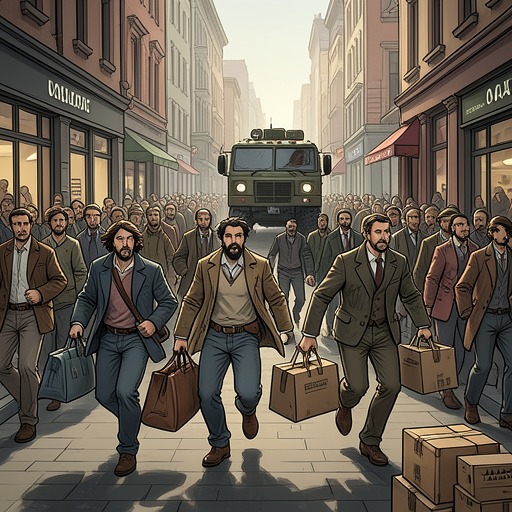
As the Portuguese prepared to leave, they built crates to carry their household goods overseas. Wealthier residents commissioned large, carefully finished containers; poorer families made do with warped boards, tin, and whatever else they could find.
Soon people spoke less about their houses than about their crates. Under cover of night, they transferred furniture, clothing, photographs, and countless ordinary possessions from the stone city into the wooden one, compressing whole domestic worlds into shipping containers.
Late September to October 1975
A City Packed for Departure
[Luanda](entity:location-recall-location-luanda-428fd2865077)’s shops reflected the hurried retreat. People bought food, clothes, medicine, watches, and other portable goods, while the bookshop stood empty because books were too heavy to take. A wedding-dress shop and a funeral business, by contrast, offered their services in a city where celebration and death remained close at hand.
Kapuściński moved through these places with [Dona Cartagina](entity:character-recall-character-dona-cartagina-139d1c1eabad), who tried to arrange practical matters for the hotel’s dwindling residents. The ordinary businesses of the city were becoming props from a life that was ending.
October 1975
The Wooden City Sails
The crates were carried to the port and stacked into a temporary town beside the sea. After the refugees left, the wooden city itself sailed away in sections toward [Lisbon](entity:location-recall-location-b6651f2dd904), Rio de Janeiro, and Cape Town.
An Angolan soldier watched it depart and said that the Portuguese had taken everything, but that the remaining city was now theirs. His words brought the private loss of the exiles into contact with the new country’s claim to its own home.
Early October 1975
The City’s Services Disappear
As the population drained away, the police, firemen, and garbage collectors left [Luanda](entity:location-recall-location-luanda-428fd2865077). A fire engine was put to use carrying water to the front, then was hit and abandoned; meanwhile, rubbish accumulated in the streets and began to rot in the heat.
The city’s institutions had vanished before its buildings did. Without hospitals, pharmacies, or basic services, the remaining residents were left to endure stench, sickness, and the growing expectation that Luanda might be attacked.
After the Portuguese army left Luanda
The Dogs of Luanda
Pets abandoned by fleeing owners gathered outside military headquarters, where Portuguese sentries fed them NATO rations. When the army departed, the dogs lost that source of food and eventually disappeared from the city.
Kapuściński imagined that they had followed the human exodus or found a way out toward a neighboring country. Their vanishing became another sign that the stone city had lost the life that once gave it meaning.
Early October 1975
Ndozi’s Green Soldiers
Kapuściński left the dying city for the front and met [Comandante Ndozi](entity:character-recall-character-comandante-ndozi-aa1e60da57b8), whose experienced guerrilla unit now included boys with little preparation for battle. Ndozi explained that inexperienced soldiers often fired blindly, not to hit the enemy but to quiet the terror inside themselves.
He described an attack in which one boy aimed a bazooka into the sky. The lesson was not merely about poor training: the soldiers had to fight their own fear even as the war forced them to grow up as fighters instead of students.
During Kapuściński’s conversations with Ndozi
The History Behind the Front
[Comandante Ndozi](entity:character-recall-character-comandante-ndozi-aa1e60da57b8) linked the new war to [Angola](entity:location-recall-location-angola-fdab84759b0c)’s centuries of slave-raiding and conflict. He described a country whose communities had often been separated by language and mistrust, and argued that outside powers were exploiting divisions among its people.
He said the country had to be made into one nation and its inhabitants weaned from hatred. His hope was practical and modest: Angolans would have to learn to shake hands across the lines that had divided them.
Early October 1975
The Battle for Caxito
[Comandante Ndozi](entity:character-recall-character-comandante-ndozi-aa1e60da57b8)’s unit captured [Caxito](entity:location-recall-location-caxito-6e18bdd7bce9) from the FNLA, taking about 120 prisoners. [Comandante Ju-Ju](entity:character-recall-character-comandante-ju-ju-fe81f93e247e) interrogated them one by one, expecting to shame them for serving as agents of imperialism.
Their answers complicated the accusation. One man said he had been rounded up in [Kinshasa](entity:location-recall-location-kinshasa-c91b9ddb95ed) and forced into the FNLA; a teenage prisoner said he had been promised schooling and wanted to become an artist. Their accounts revealed how coercion, hunger, and hope could put young Angolans on opposite sides of the same war.
The evening after the Battle for Caxito
The Soccer Argument
After the battle, MPLA guards and FNLA prisoners argued passionately about a football match between Benfica and Ferroviário. The dividing line of the prison enclosure did not match the division between the rival teams; both sides had supporters on either side.
For a while, the boys forgot their captivity and the recent dead. Their shared enthusiasm did not end the war, but it offered a brief glimpse of ordinary human interests surviving inside it.
During Kapuściński’s journeys across Angola
The Checkpoint Ritual
Travel meant negotiating improvised checkpoints manned by soldiers, militia, peasants, and children. The sentries might block a road with fuel drums, stones, thorns, or even a wardrobe; travelers had to approach slowly, wait without appearing either fearful or arrogant, and present their pass.
Near the front, the greeting could decide whether a visitor lived: MPLA sentries said camarada, while FNLA and UNITA forces used irmão. Once the danger passed, the checkpoint might become a market, resting place, or source of news before the travelers set out again.
October 1975
Benguela’s Empty Luxury
Kapuściński reached [Benguela](entity:location-recall-location-benguela-de92fb066e93), an almost deserted city where locked villas and abandoned cars stood close to settlements of clay and tin. The sharp contrast between colonial comfort and African poverty remained visible in the empty streets.
He found the central-front staff in a villa where ammunition had been laid among the flowers. Comandante Monti was typing requests for more people and weapons, while the only armored personnel carrier at his front had already been knocked out.
October 1975
The Escort Carlotta
Kapuściński and a television crew from [Lisbon](entity:location-recall-location-b6651f2dd904) wanted to visit the front, though several crew members feared for their families and their lives. Monti persuaded them that the midday heat made fighting unlikely and assigned [Carlotta](entity:character-recall-character-carlotta-68f49ce11a52) to escort them.
Only twenty, Carlotta had become known for leading a small detachment out of an encirclement in [Huambo](entity:location-recall-location-huambo-1c74687e21dc). The visitors were drawn to her confidence and constructed an image of her beauty and courage as they drove toward [Balombo](entity:location-recall-location-balombo-9bde493b0e33).
October 1975
The Balombo Visit
The group reached [Balombo](entity:location-recall-location-balombo-9bde493b0e33) after passing burned villages, plantations, and bodies left on the road. The town had just been taken by an MPLA detachment and contained no civilians, only young soldiers celebrating their brief victory.
[Carlotta](entity:character-recall-character-carlotta-68f49ce11a52) kept watch while the visitors filmed and photographed. As dusk came, the group prepared to leave, satisfied that they had reached the front and returned alive.
That evening in October 1975
Carlotta Stays Behind
As the car was about to depart, [Carlotta](entity:character-recall-character-carlotta-68f49ce11a52) got out and said she would remain in [Balombo](entity:location-recall-location-balombo-9bde493b0e33). The visitors urged her to come with them, but she laughed, waved goodbye, and let the car leave.
Later, a soldier reached the group at dinner in [Benguela](entity:location-recall-location-benguela-de92fb066e93) and said that the enemy had attacked and Carlotta had died. Kapuściński and the others wondered whether they could have insisted she leave, or whether she had stayed to organize cover for their departure; their uncertainty became inseparable from their guilt.
After Carlotta’s death in October 1975
The Unplanned Flight South
Kapuściński flew out of [Benguela](entity:location-recall-location-benguela-de92fb066e93) with a crew headed toward [Lubango](entity:location-recall-location-lubango-64773f23d3f7), although he had no pass for the southern front and little more than his camera and a small amount of money. At Lubango, he learned that the flight was the last one leaving and that the town might be surrounded.
He chose to continue toward the front rather than turn back. A young political commissar, [Nelson](entity:character-recall-character-nelson-7944baaf15df), immediately wrote him a pass and pushed him into a truck headed south.
October 1975
The Road to Pereira d’Eça
The overloaded truck carried rifles, ammunition, fuel, flour, and six soldiers along a road bordered by dense thorn bush. Kapuściński did not know the destination until [Diogenes](entity:character-recall-character-diogenes-76a51a7e5ffe) told him they were heading for [Pereira d’Eça](entity:location-recall-location-pereira-d-e-a-d5edebd2b082), where the enemy controlled the countryside and previous convoys had been lost in ambushes.
The road was their only route through a dry, empty landscape. They passed the wreckage of earlier trucks, including charred remains, and continued because leaving the road could mean dying of thirst while staying on it could mean being ambushed.
Night in Pereira d’Eça in October 1975
Farrusco’s Isolated Garrison
The convoy reached [Pereira d’Eça](entity:location-recall-location-pereira-d-e-a-d5edebd2b082), where [Comandante Farrusco](entity:character-recall-character-comandante-farrusco-15ca5edc7a27) led an isolated unit of about 120 men. Its only reliable link to the rear was a long road through territory controlled by the enemy, and the soldiers lacked the strength to defend the surrounding region.
A local baker’s son, Humberto, had returned from [Namibia](entity:location-recall-location-namibia-d3e0afefde1c) with news that South African forces might soon advance. His elderly mother had stayed behind to keep baking bread, which the soldiers received without payment; [Farrusco](entity:character-recall-character-farrusco-6e5b0ac40aec) said she stood for life and was worth protecting.
Dawn after the report from Namibia
The Road on the Map
After waiting through the night, [Farrusco](entity:character-recall-character-farrusco-6e5b0ac40aec)’s men checked the road and reported no enemy in sight. A map at headquarters showed how alone the unit was: one marker at [Pereira d’Eça](entity:location-recall-location-pereira-d-e-a-d5edebd2b082), others far to the north, and a long road between them through bush and desert.
Kapuściński left with Farrusco in a jeep, hoping to carry the warning back to the rear. At checkpoints along the way, the travelers understood that even a short stretch of road could become a front if opposing units met.
On the return journey north
A Front Without a Line
[Farrusco](entity:character-recall-character-farrusco-6e5b0ac40aec) described a war in which the front had no fixed boundary. Units were isolated around scarce water sources, and the space between them belonged to no one until an encounter turned it into a battlefield.
He feared that the South African forces would spot and kill him on the road, but he insisted that he was not afraid. He asked Kapuściński to tell [Luanda](entity:location-recall-location-luanda-428fd2865077) that the southern front needed people and weapons, because it could not hold if the invasion advanced from [Namibia](entity:location-recall-location-namibia-d3e0afefde1c).
A later night in October 1975
The Night Battle at Caculi
[Nelson](entity:character-recall-character-nelson-7944baaf15df) drove Kapuściński, [Comandante Bota](entity:character-recall-character-comandante-bota-8334a5b6d171), and Manuel along the only road from [Lubango](entity:location-recall-location-lubango-64773f23d3f7) to [Benguela](entity:location-recall-location-benguela-de92fb066e93) while fighting raged nearby. At Caculi, a frightened commander stopped them to ask for fuel; his men were being killed, but he had no gasoline to move them.
Later they encountered two boys fleeing the battle. Bota ordered them back to their unit, and the boys disappeared into the darkness. The journey exposed both the disorder of the front and the pressure placed on frightened children to keep fighting.
Dawn after the night battle
Another Day of Life
At dawn, the travelers found Quilengues apparently empty and the road ahead clear. [Nelson](entity:character-recall-character-nelson-7944baaf15df) straightened and said, “Another day of life,” then began a sequence of exercises that the others joined, including the unsteady and still-drunk [Comandante Bota](entity:character-recall-character-comandante-bota-8334a5b6d171).
The sudden calisthenics turned survival into a bodily celebration. They had passed through danger and reached morning, though nothing suggested that the larger war had become safer.
18 October 1975
The Return to Luanda
Kapuściński returned to [Luanda](entity:location-recall-location-luanda-428fd2865077) in a tanker truck sent to find gasoline for the immobilized southern front. At the Tivoli, he found cockroaches in his bed and learned that the city had been without water for three days.
A cook gave him water from a tin barrel, and the relief made him feel himself coming back to life. He then tried to telephone the people who might receive his warning about the South African advance, but no one answered.
Weekends during the war
The Weekend Standstill
Kapuściński realized that the silence of the telephones was part of a broader weekend stoppage. From Saturday into Sunday, guns fell silent, offices closed, roads emptied, and people seemed to vanish from public life.
The pause united enemies in a strange shared lethargy. It offered no explanation for where everyone went, but it gave the war its own rhythm: a temporary stillness followed by the return of danger.
18 October 1975
The Cuban Visitors
A mysterious caller directed Kapuściński to a meeting with two men, who arrived at his room in civilian clothes. They identified themselves as Mauricio and [Pablo](entity:character-recall-character-pablo-ae43f39c6dd1), army instructors from [Cuba](entity:location-recall-location-b871768274f6), and asked what he had seen on the southern front.
Kapuściński warned that the South African forces had superior equipment and that the MPLA lacked the weapons to stop them. The Cubans admitted the danger but said they had only just arrived to train an army that was still a collection of scattered units.
Planned for October and November 1975
Operation Orange
The account of the South African plan describes a coordinated advance from the south, north, and east, with [Luanda](entity:location-recall-location-luanda-428fd2865077) as its objective. The operation aimed to occupy the capital before the independence date and install an [FNLA–UNITA coalition](entity:relation-recall-relation-fnla-unita-coalition-8f3acffd0ccf) government.
The plan’s scheduled beginning was moved earlier after military planners debated the time needed to break resistance and extend supply lines. The account fixes zero hour on 19 October, exposing the scale and organization behind the invasion that the defenders had only partly understood.
19 October 1975
Farrusco Is Wounded
On Sunday, [Farrusco](entity:character-recall-character-farrusco-6e5b0ac40aec) searched for his exhausted driver and set out in a red jeep. They encountered an advancing column of armored vehicles with a helicopter overhead, and gunfire struck the vehicle.
Farrusco was shot through the lungs and Antonio was wounded in the leg. Antonio managed to reverse and carry his badly wounded commander away as the column continued toward [Pereira d’Eça](entity:location-recall-location-pereira-d-e-a-d5edebd2b082).
Late October 1975
The City Waits
In [Luanda](entity:location-recall-location-luanda-428fd2865077), life continued amid rumors that enemy forces were nearing the city. Residents tried to find food and water, watched the streets, and waited for news from fronts with which the capital had almost no communication.
Kapuściński described a city suspended between ordinary routines and impending violence. People could still pass a Sunday at the movies, even as artillery sounded in the distance and the invasion columns moved closer.
Late October 1975
The General Mobilization
As attacks threatened [Luanda](entity:location-recall-location-luanda-428fd2865077), the MPLA leadership announced a general mobilization of men between eighteen and forty-five. Kapuściński transmitted the announcement to [Warsaw](entity:location-recall-location-a2daecdb29f1), reporting that fighting was under way on the city’s outskirts and that the situation was very serious.
The order drew young men directly toward the front, many with little training. In the capital, fear and confusion spread alongside the demand that everyone take up arms to defend the country.
Late October 1975
The City’s Two Lifelines
Kapuściński saw the survival of [Luanda](entity:location-recall-location-luanda-428fd2865077) resting on two men. [Ruiz](entity:character-recall-character-ruiz-05468b64b7e6) flew the MPLA’s battered plane between the capital and besieged towns, carrying ammunition and supplies and bringing back the seriously wounded.
[Alberto Ribeiro](entity:character-recall-character-alberto-ribeiro-5daf43072ccb) repaired the pumping station on the [Bengo River](entity:location-recall-location-d607727939d8), which supplied the city’s water. If the station failed, Luanda could endure only a few days without water; if Ruiz’s aircraft failed, isolated defenders and wounded soldiers might be abandoned.
Late October 1975
The Oppressive Calm
After the first warnings, the front around [Luanda](entity:location-recall-location-luanda-428fd2865077) fell quiet and news from elsewhere dried up. Kapuściński felt an oppressive stillness that seemed to tighten around the city, and noticed the same strained, expressionless faces in others.
At the telex, [Warsaw](entity:location-recall-location-a2daecdb29f1) said that the invasion continued but offered no concrete news. The correspondent knew that something was gathering, yet the absence of reliable information made the wait itself a source of dread.
Late October 1975
Nelson’s Warning
[Nelson](entity:character-recall-character-nelson-7944baaf15df), Manuel, and [Comandante Bota](entity:character-recall-character-comandante-bota-8334a5b6d171) arrived at Kapuściński’s hotel after a dangerous journey. They said that the southern front had collapsed and that South African forces were already outside [Benguela](entity:location-recall-location-benguela-de92fb066e93), with another column advancing toward [Luanda](entity:location-recall-location-luanda-428fd2865077).
They described the attackers as mobile, well-equipped, and difficult to intercept. The MPLA forces were withdrawing because they could not match the enemy’s armor, artillery, or training.
3 November 1975
The Northern Front Visit
[Pablo](entity:character-recall-character-pablo-ae43f39c6dd1) took Kapuściński to the trenches on [Luanda](entity:location-recall-location-luanda-428fd2865077)’s northern approaches. Across the river, both sides prepared for an attack around the damaged pumping station and the blown bridge; soldiers asked to be photographed, wanting a record that they had been alive there.
On the way back, the group received a handwritten message saying that [Benguela](entity:location-recall-location-benguela-de92fb066e93) had fallen and the Cubans who fought there had died. Pablo warned that the advancing column could reach Luanda within a day if it drove without stopping.
4 November 1975
Confusão in the Hotel
Before dawn, armed men entered the Tivoli, ordered its residents downstairs, and threatened to take them for interrogation as suspected infiltrators. The hotel had no reliable authority to restrain anyone with a pistol; an MPLA press official eventually arrived and dismissed the intruders.
In the days that followed, rumors placed the South African vehicles at different distances from the city and gave conflicting accounts of who held each town. A map behind reception was rubbed nearly blank by residents’ fingers as they argued over the front.
During the fighting before the November assault
The Massacre Road
Kapuściński recalled traveling with local journalists to Lucala after it had been recaptured from an FNLA unit. Along the road toward Samba Caju, villages had been burned and people murdered; severed heads and mutilated bodies lay beside the route.
The memory shaped the fear that an FNLA victory in [Luanda](entity:location-recall-location-luanda-428fd2865077) would bring a massacre. Kapuściński had initially doubted the stories about cannibalism, but the destruction he had witnessed made the threat of the approaching forces feel immediate and personal.
4 November 1975
The Reality Denied
[Comandante Ju-Ju](entity:character-recall-character-comandante-ju-ju-fe81f93e247e)’s broadcasts remained triumphal even as the MPLA lost territory and faced a serious threat to [Luanda](entity:location-recall-location-luanda-428fd2865077). Kapuściński objected to the principle of refusing to acknowledge reality, because false optimism could keep people from acting when action was needed.
At the same time, the correspondent’s own dispatches and plans were disrupted by arrests, failing communications, and uncertainty. The city’s public confidence and its actual military position seemed to belong to different worlds.
5 November 1975
The Cuban Landings
During a violent rainstorm, Kapuściński watched Cuban aircraft land at [Luanda airport](entity:location-recall-location-6d293f11bfb9). Cuban soldiers disembarked in camouflage with packs and weapons and formed ranks before moving toward waiting trucks.
The sight marked a visible change in the balance of the war. The soldiers went to the front the following day, joining an intervention that would help the MPLA resist the advancing forces.
10 November 1975
The Portuguese Garrison Leaves
The final Portuguese platoon boarded a ship and the Portuguese garrison withdrew from [Luanda](entity:location-recall-location-luanda-428fd2865077). Kapuściński said farewell to officers who had helped him and treated him loyally, despite the hostility between the colonial power and the Angolan movement.
The withdrawal removed the last Portuguese military presence as independence approached. The city also lost its statues of colonial governors and explorers, which were gathered from their pedestals and placed together near the citadel.
11 November 1975
Angolan Independence
At midnight, [Agostinho Neto](entity:character-recall-character-agostinho-neto-36910377ec75) proclaimed the People’s Republic of [Angola](entity:location-recall-location-angola-fdab84759b0c) before a crowd gathered in the dark. His voice broke as he read, and the ceremony ended with applause and cheers before the people dispersed.
In the Tivoli, the exhausted residents opened champagne and whisky. [Oscar](entity:character-recall-character-oscar-a322eac993da), overcome by the bleakness of the moment, cried that if this was independence he would blow his brains out, then fell asleep at the table.
11 November 1975
The Divided Country
Kapuściński’s dispatch reported that the FNLA and UNITA intended to form a rival government based in [Huambo](entity:location-recall-location-huambo-1c74687e21dc). [Angola](entity:location-recall-location-angola-fdab84759b0c) was, for the moment, divided into competing political territories whose borders changed as armies advanced and retreated.
The struggle had become diplomatic as well as military, with recognition of the rival governments at stake. Meanwhile, both sides were gaining men, training, and more destructive weapons, and the war was intensifying rather than ending.
After 11 November 1975
The Cuvo River Front
[Ruiz](entity:character-recall-character-ruiz-05468b64b7e6) flew Kapuściński toward the southern front, where the South African advance had reached the [Cuvo River](entity:location-recall-location-cuvo-river-b0cfa4af01ab). From the air, the correspondent saw a column of armored vehicles near the destroyed bridge; on the ground, defenders were waiting for reinforcements while the river obstructed the crossing.
At dawn, he passed soldiers leading small, barefoot children away from the fighting. Wounded Angolan and Cuban soldiers later shared the return flight to [Luanda](entity:location-recall-location-luanda-428fd2865077), while heavy aircraft arrived carrying mortars for the defense.
After his southern-front report in November 1975
Permission to Return
Worn down, short of money, and barely alive from the strain, Kapuściński asked [Warsaw](entity:location-recall-location-a2daecdb29f1) for permission to leave [Angola](entity:location-recall-location-angola-fdab84759b0c). He believed the Angolans would eventually win, but that the fighting would continue for some time.
Warsaw agreed, and he began arranging his departure. [Pablo](entity:character-recall-character-pablo-ae43f39c6dd1) gave him cigars, [Comandante Ju-Ju](entity:character-recall-character-comandante-ju-ju-fe81f93e247e) gave him a book on Angola, and [Dona Cartagina](entity:character-recall-character-dona-cartagina-139d1c1eabad) broke down crying as he promised that he would return.
Before Kapuściński’s departure in November 1975
Neto’s Poem
Kapuściński visited [Agostinho Neto](entity:character-recall-character-agostinho-neto-36910377ec75) at his villa and spoke with him about poetry. Neto had little time to write, but Kapuściński knew by heart lines from [Sagrada Esperança](entity:object-recall-object-sagrada-esperan-a-c4f5465b9846) that promised a return to [Angola](entity:location-recall-location-angola-fdab84759b0c)’s red, white, and green lands.
He wanted to ask about the worsening military situation but could not bring himself to press the president with painful questions. After a silence, he said goodbye and left, carrying the poem’s promise of return into his departure.
November 1975 to January 1976
The MPLA Counteroffensive
After independence, MPLA forces supported by Cuban units began a counteroffensive. During December and January, the armies of the FNLA and UNITA were destroyed, and the balance of the war shifted.
The outcome did not bring lasting peace. The conflict continued after the immediate crisis of independence, sustained by political division and the resources available to the rival sides.
27 March 1976
The South African Withdrawal
The last South African army units withdrew from Angolan territory, returning along the road Kapuściński had traveled with [Diogenes](entity:character-recall-character-diogenes-76a51a7e5ffe) and [Comandante Farrusco](entity:character-recall-character-comandante-farrusco-15ca5edc7a27). [Farrusco](entity:character-recall-character-farrusco-6e5b0ac40aec) had survived after being hidden in [Lubango](entity:location-recall-location-lubango-64773f23d3f7), and his wounds eventually healed.
Kapuściński did not know whether Diogenes was alive. Antonio and Carlos had been killed, and the return of the South African forces did not end the country’s internal war.
1976 to 2000
The War Continues
Kapuściński’s account looks beyond the immediate battles to the long civil war that followed. The government controlled oil, while [Jonas Savimbi](entity:character-recall-character-jonas-savimbi-a860d366e8d7)’s forces controlled diamond resources; both sides could draw on that wealth to keep fighting.
He wondered what had become of the people he had met. [Comandante Ndozi](entity:character-recall-character-comandante-ndozi-aa1e60da57b8) and Comandante Monti had died after mines exploded beneath them, while [Oscar](entity:character-recall-character-oscar-a322eac993da), Gilberto, and Felix disappeared from his knowledge and perhaps from memory.
Near the ending
Cartagina’s Return
Kapuściński could scarcely imagine [Luanda](entity:location-recall-location-luanda-428fd2865077) or the war without [Dona Cartagina](entity:character-recall-character-dona-cartagina-139d1c1eabad). Rather than accept that she might be gone, he pictured her still walking briskly toward the Tivoli each morning, gray-haired and ready to clean the hotel.
In his imagined reunion, she would pause when asked her name and politely say that she was Dona Cartagina. The book ends by holding on to that possibility: an ordinary person surviving in memory where so many others have vanished.